Egypt is polarizing. There are those who visit and vow to never set foot there again, put off by hawkish vendors and the unrelenting ruckus of Cairo. Others recount their adventure with a shimmer in their voice, reflecting the satisfaction of finally fulfilling a long-held childhood dream molded by movies and mythos. I wasn’t too sure which camp I would fall into.
I descended on Sharm el-Sheikh, mentally prepping myself for two weeks of miming through Arabic and hard haggling. After some back and forth trying to find the entry visa payment line, I handed my newly issued passport over to the immigration officer. He flipped through the empty document, examining each page, until he reached the last one.
“You don’t have any stamps yet,” he remarked with a satisfaction in his voice that sounded almost flirtatious. “Well, I’m going to give you a big, beautiful one,” he continued, pressing a full-page sticker onto the red booklet, no longer pristine. “Welcome to Egypt.”
Sharm el-Sheikh · شرم الشيخ
The Sinai Peninsula—a vast triangular wedge linking Asia and Africa—is far from the typical starting point for a journey along the Nile. But cradled by the Red Sea to the south, it is a diver’s haven, home to well-known retreats like Sharm el-Sheikh and Dahab.
Sharm has all the airs of a laid-back resort town: a long seaside strip punctuated by LED lights and scattered palms, shops selling everything one can expect to find at a North African bazaar, and street food vendors with quick fixes for lazy hunger—like hawawshi, for example—a large pocket of bread stuffed with spiced minced beef.
As far as aesthetics go, the streets themselves are mostly unremarkable, save the amount of dust drifting in from the desert. It’s the mountains in the backdrop that command your attention. According to the Abrahamic traditions, it was on this peninsula that Moses received the Ten Commandments. Come dusk, when a soft glow settles over the ochre hills and serrated peaks, the landscape looks scriptural.
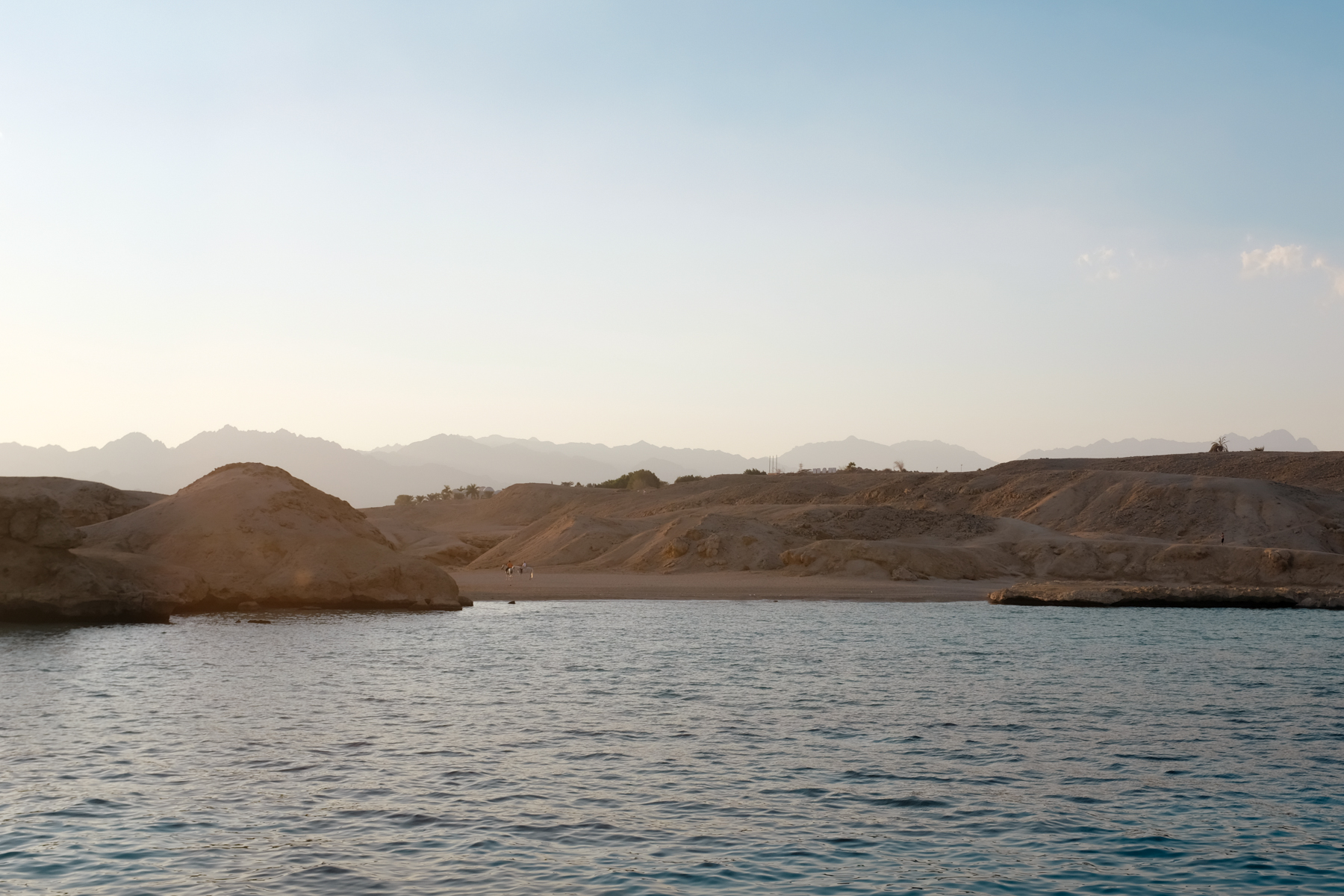
Sinai’s significance is not only biblical. After the British conquest of Egypt in 1882, the territory remained under the control of the United Kingdom until 1936. In the 1950s, Egypt and Israel fought over the land, a squabble which officially ended in 1982. Today, the northeastern edge of Sinai borders Gaza, making it the part of Egypt most susceptible to geopolitical tremors. But little of this tension makes its way across the peninsula, to the placid shores of Sharm el-Sheikh.
By day, the heat is formidable—nearly enough to roast the sweetened spiced cashews that stack the local shop counters. Underwater, however, the temperature is indulgent.
Despite its name, the Red Sea is strikingly blue, although there is a reason for this contradiction. On occasion, algal blooms tint the water red. Beneath the surface is a world of coral gardens hiding some of nature’s most beautiful marine creations: octopuses, pufferfish, giant clams, lionfish, and eagle rays all make their home here. One day, I found myself diving off Tiran, an island between Egypt and Saudi Arabia. Since the island’s transfer to Saudi control in 2016, divers are requested to bring their passports onboard—just in case. A day on the Red Sea is never dull.
The Suez Canal · قناة السويس
Separating the Sinai Peninsula from the rest of Egypt is the Suez Canal. The famous man-made waterway, completed in 1869, links the Mediterranean with the Red Sea and carries roughly ten percent of global trade. And for the price of 330 Egyptian pounds—about seven US dollars—travelers can skirt by on an overnight bus from Sharm el-Sheikh to Cairo.
While the road is smooth, sleep is elusive. There are multiple control points along the way, as well as a thorough bag search and passport inspection at the Canal itself. The scrutiny is intrusive, but for one of the world’s main shipping arteries, it’s simply business as usual.
Cairo · القاهرة
The Go Bus reached Cairo’s central Tahrir Square at three in the morning, and I wasted no time shuffling to my hostel. Even in the depths of night, Egypt’s capital is incessantly noisy. By the next day, the honking began to resemble orchestral horns. Reframed as a symphony, Cairo’s chaos becomes more bearable. There are pockets of calm, such as the neighborhood of Zamalek. Located entirely on the island of Gezira in the Nile, it is Cairo’s diplomatic quarter and lined with leafy streets, affluent residences, riverside venues, and rooftop bars.
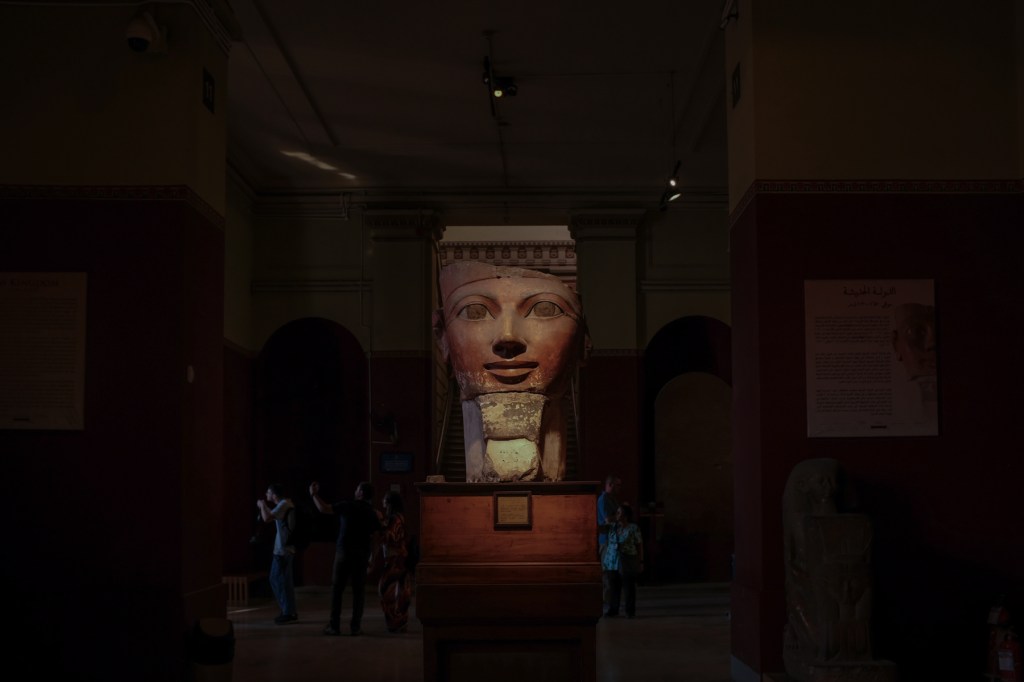
For more than a century, The Egyptian Museum beside Tahrir Square has been the primary attraction for visitors seeking history. Its collection of over 170,000 items includes sarcophagi and sphinxes to Greco-Roman artifacts that offer a peek into Egypt’s years as a part of the Roman Empire. It remains worth a visit, though much of the spotlight has now shifted towards Giza following the opening of the Grand Egyptian Museum in late 2024.
By accident while looking for a restroom, I wandered into my first ahwa, or Egyptian coffeeshop. The name derives from qahwa, the Arabic word for coffee, but the drink of choice in these establishments is black tea, taken with some sugar, often sipped alongside a shisha. The Egyptian ahwa occupies a role akin to the Western pub—a space for men to gather and unwind away from women and wives. As conspicuous as I looked, I was never unwelcome. Contrary to my expectations, I found Cairenes to be consistently helpful, even when we shared no common language.
Giza · الجيزة
The Cairo Metro connects Cairo with the neighboring city of Giza on the Nile’s west bank. Although fairly easy to navigate with frequent trains, reaching Giza’s main attractions—the Grand Egyptian Museum and the Pyramids—requires an additional bus ride.
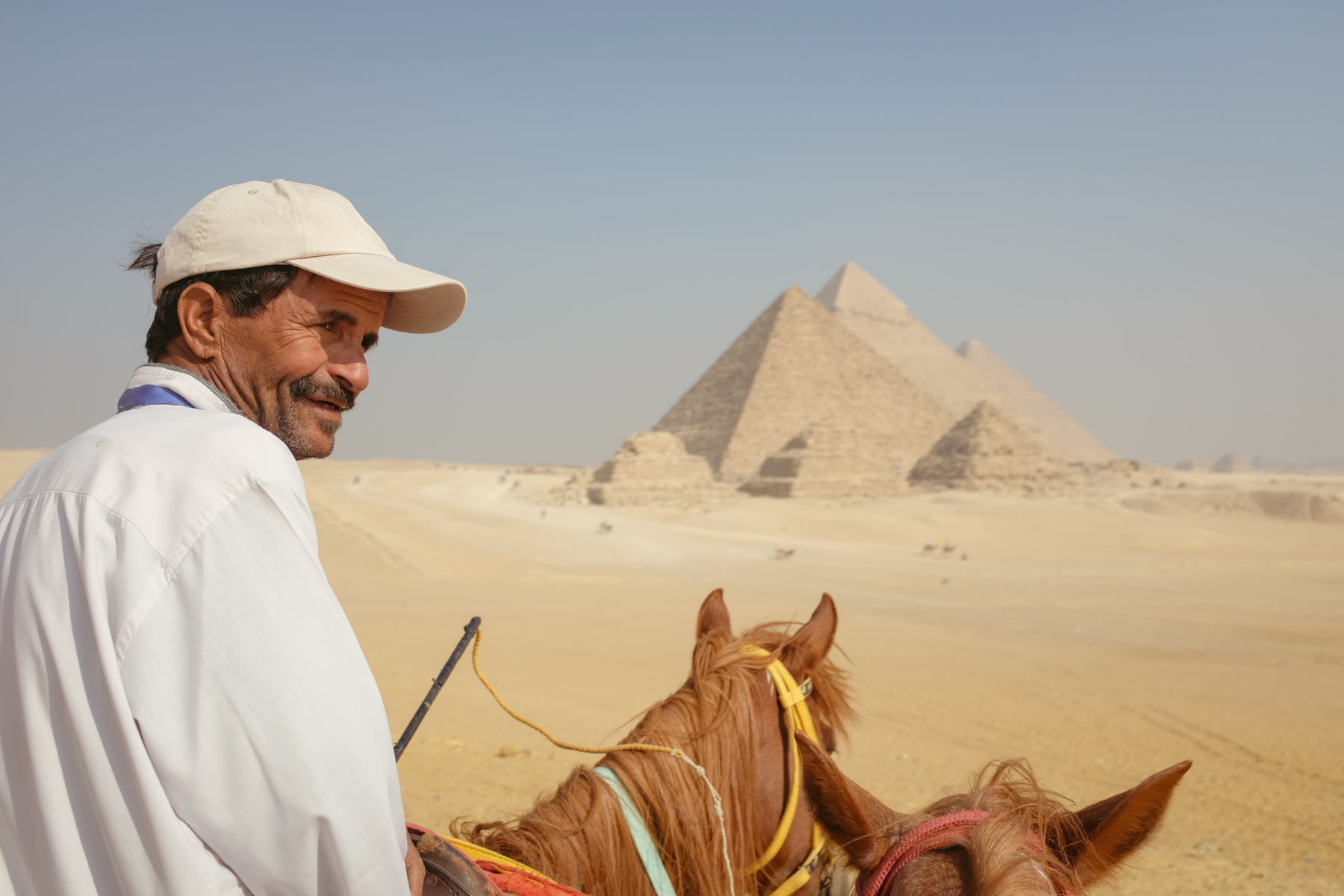
The outskirts of Giza may be the first place where travelers encounter genuine Bedouin hospitality. Once nomadic desert dwellers, many Bedouin families have traded tradition for a stationary, urban lifestyle, opening cozy rooms and tents along the edge of the city. Beneath a clear night sky with unobstructed views of the last surviving Wonder of the Ancient World, you might tuck into a coal-grilled dinner, hot hibiscus tea, and a plate of fūl—hearty fava bean dip.
The famous Pyramid and Sphinx complex is sprawling but walkable. Travelers short on time can even squeeze in a visit to the Grand Egyptian Museum on the same day. While Cairo’s Egyptian Museum is steeped in 20th-century aura, Giza’s GEM—the world’s largest museum devoted to a single civilization—is a beacon of architectural modernity. In between weaving among crocodile mummies and obelisks, head on over to the café for a glass of fakhfakhina—a refreshingly energizing cocktail that is half juice, half fruit salad.
Aswan · أسوان
The true journey along the Nile begins aboard the Abela Sleeper Train. From Cairo or Giza, it’s an overnight ride to Aswan. For $130, passengers are served dinner before being gently rocked to sleep, waking the following morning to the palm fields of Upper Egypt—the country’s southern reaches. (“Upper” here refers to the upper course of the Nile, which flows south to north.)
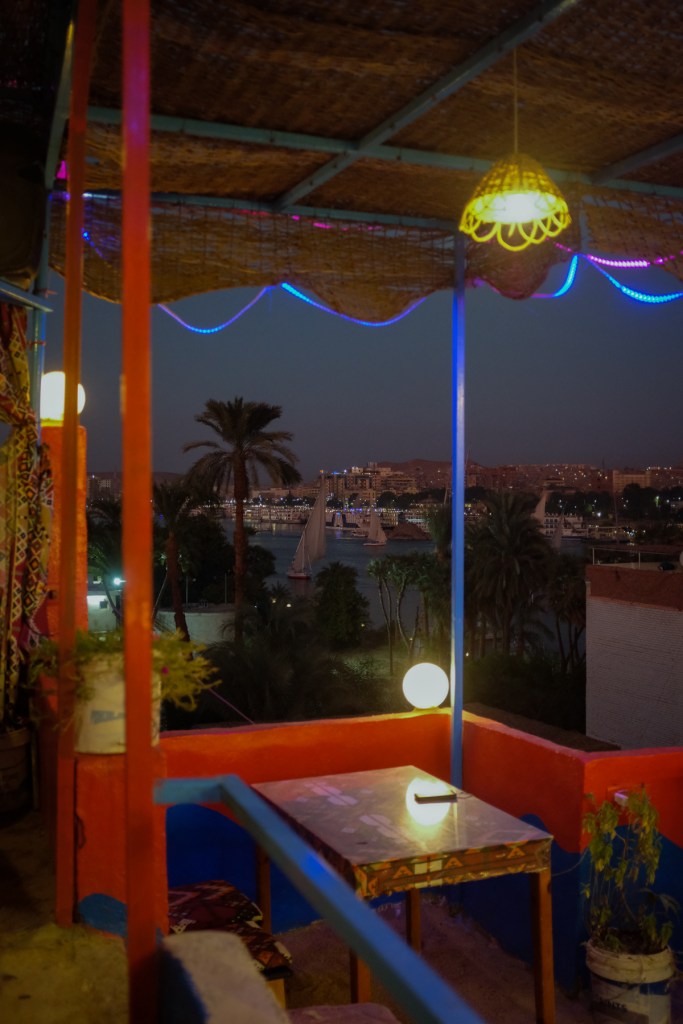
Upper Egypt feels far removed from the cacophonous Cairo, and it is. The waterway here is speckled with moving props. Cruise ships and feluccas—traditional wooden sailboats—glide gracefully over the Nile. All along the riverbank, vendors compete for tourist attention with discount offers on boat rides and tour packages. Aswan is a stage, and everyone has a role to play.
Across the river, on the west bank, are clusters of mud-and-silt constructions adorned with colorful geometric patterns and rounded domes. They offer a first glimpse into Nubian architecture. Historically, Aswan marked the border between Ancient Egypt and its southern neighbor, Nubia, though there was steady exchange between the two cultures. For roughly a century, from 754 to 656 BC, Nubian Pharaohs ruled over both Upper and Lower Egypt.
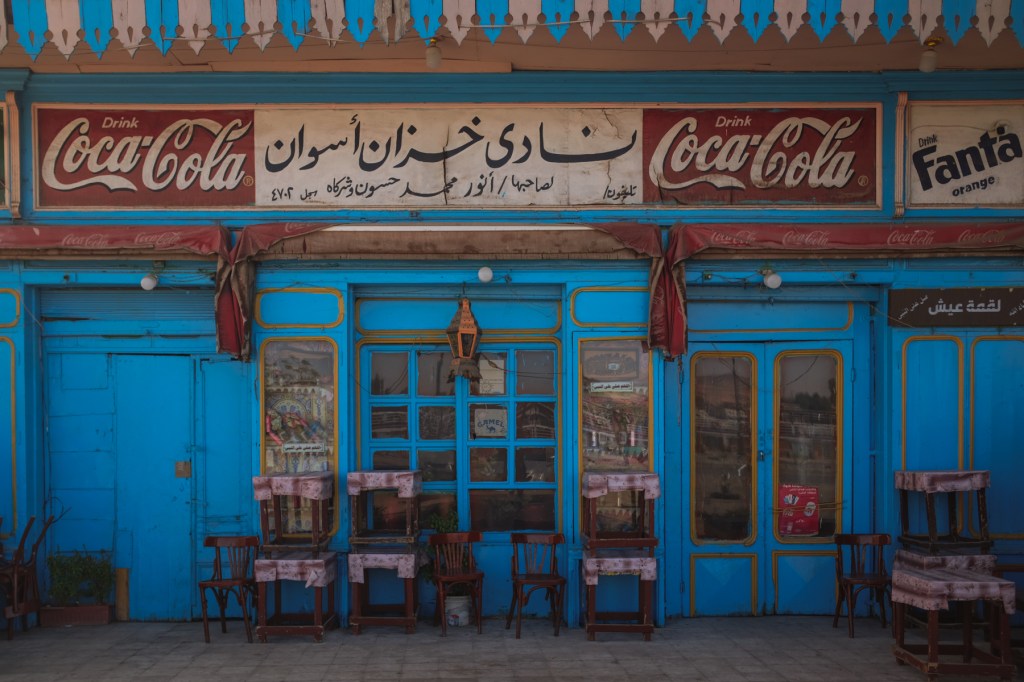
Today, most Nubians live in southern Egypt and Sudan. They preserve their own language—one of several Nilo-Saharan variants—as well as distinct customs. For a closer look, step on a motorboat bound for Elephantine Island. Officially part of Aswan, this islet in the Nile is home to several Nubian villages and numerous guesthouses.
Elephantine is a contrast to a mostly Arabized Aswan. Mornings begin with fragrant Nubian coffee spiced with cinnamon and cloves. If you’re lucky, you may even witness a wedding. The festivities start at midnight and carry on until morning, drawing in nearly the entire island.
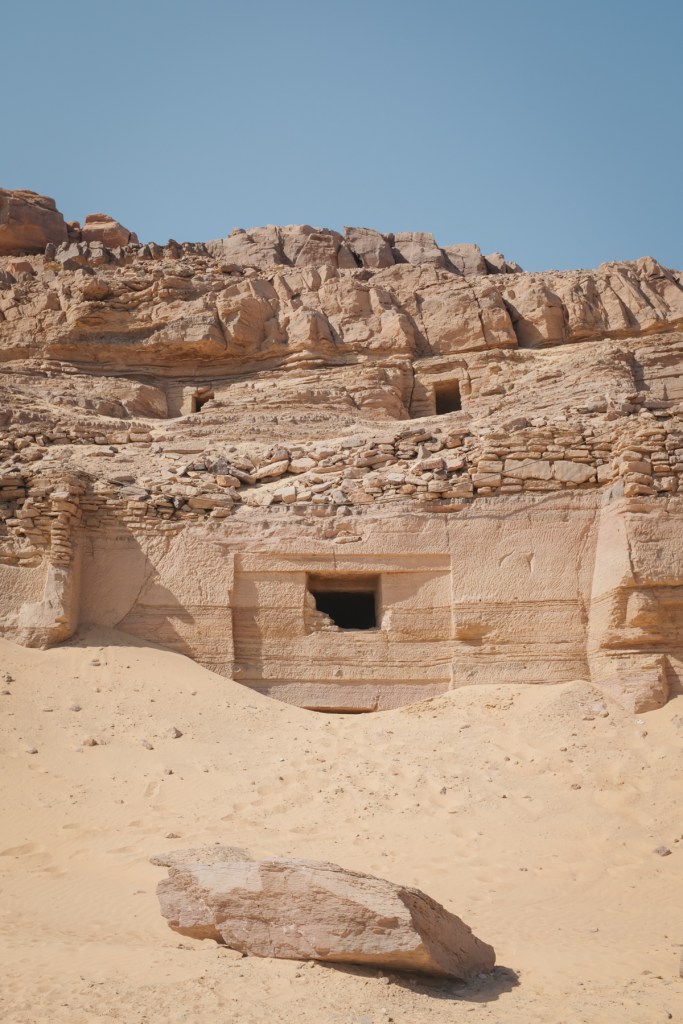
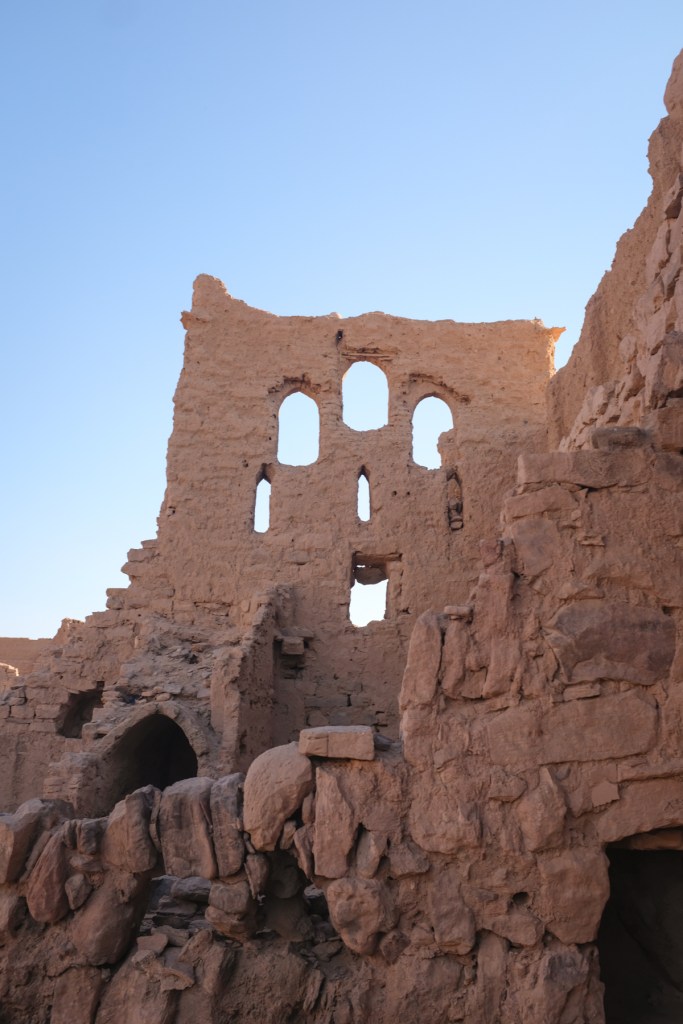
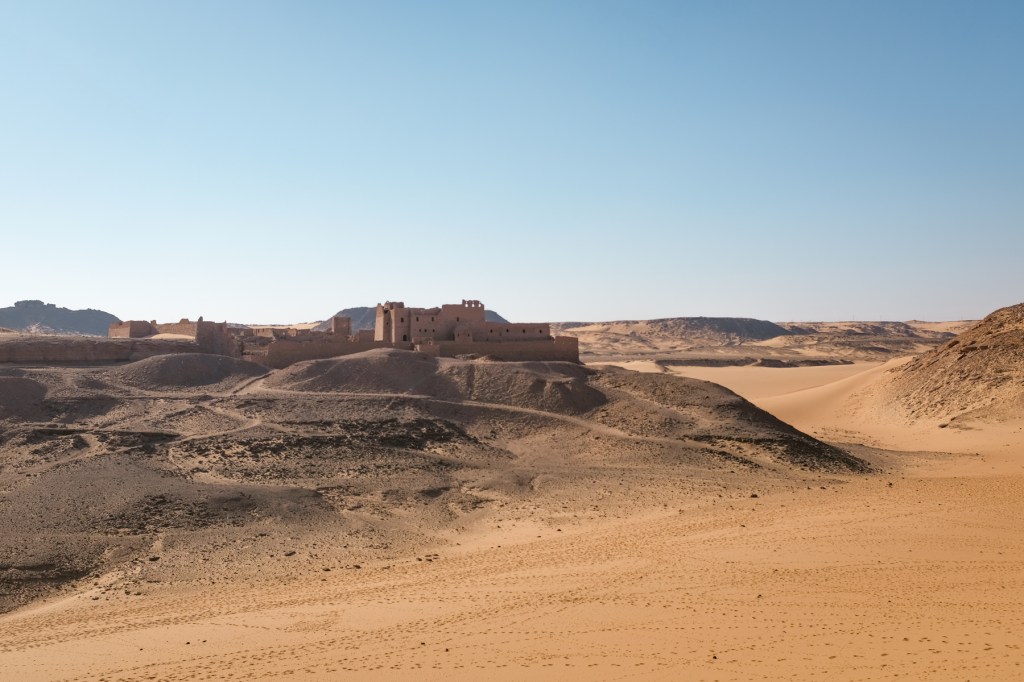
Egypt’s diversity extends beyond its Bedouin and Nubian minorities. Roughly ten percent of the population is Coptic. Like other Egyptians, Copts trace their descent to the ancient inhabitants of the land, but distinguish themselves through their adherence to the Coptic Orthodox Church. They are the country’s largest Christian community. The 7th-century Monastery of St. Simeon is one of the region’s best-preserved Coptic complexes. It lies on the west bank of the Nile, beyond a tall and sandy hill. Reaching it requires a trek through the desert past the necropolis of Qubbet el-Hawa—the Dome of the Wind—which overlooks all of Aswan.
I divided my evenings between Elephantine and the east bank. The city proper also merits wandering through; its streets brim with Egypt’s finest fare. Among the most memorable is hamam mashi—young pigeon stuffed with fragrant rice, herbs and spices. Crisp on the outside and tender within, it is a delicacy reserved for special occasions.
Easier to find are the classic dishes shared across the Maghreb and Levant: shawarma—shaved meat wrapped in pita with tahini; shakshouka—eggs poached in a tomato sauce and vegetables; and falafel. For something distinctly Egyptian, try the national dish, koshary. This beloved street food mixes pasta, fried rice, vermicelli, lentils, chickpeas and fried onions with a garlicky tomato sauce. A final splash of lemon juice and hot chili ties it all together. Savory, spicy, and sour in equal measure, the koshary embodies the essence of Egypt.
The Nile · النيل
A multi-day cruise down the Nile is an irresistible image, and a slew of modest to luxurious options await passengers along Aswan’s banks. The journey to Luxor is brief—about two days—and most cruises advertised as longer include land excursions to nearby sites such as the Aswan High Dam and the Temple of Philae.
The Aswan High Dam stands as one of Egypt’s greatest engineering feats. Its completion in 1970 enabled the country to finally fully harness the annual flooding of the Nile. The dam also created Lake Nasser, one of the world’s largest artificial reservoirs. However, the project came at considerable costs. Numerous archaeological sites were sacrificed to the rising waters. Around thirty temples—including the Ptolemaic-era Temple of Philae and the colossal Temples of Abu Simbel—were moved stone by stone to new locations. The rest lay at the bottom of Lake Nasser. In addition, more than 50,000 Nubians were displaced across Upper Egypt and Sudan.
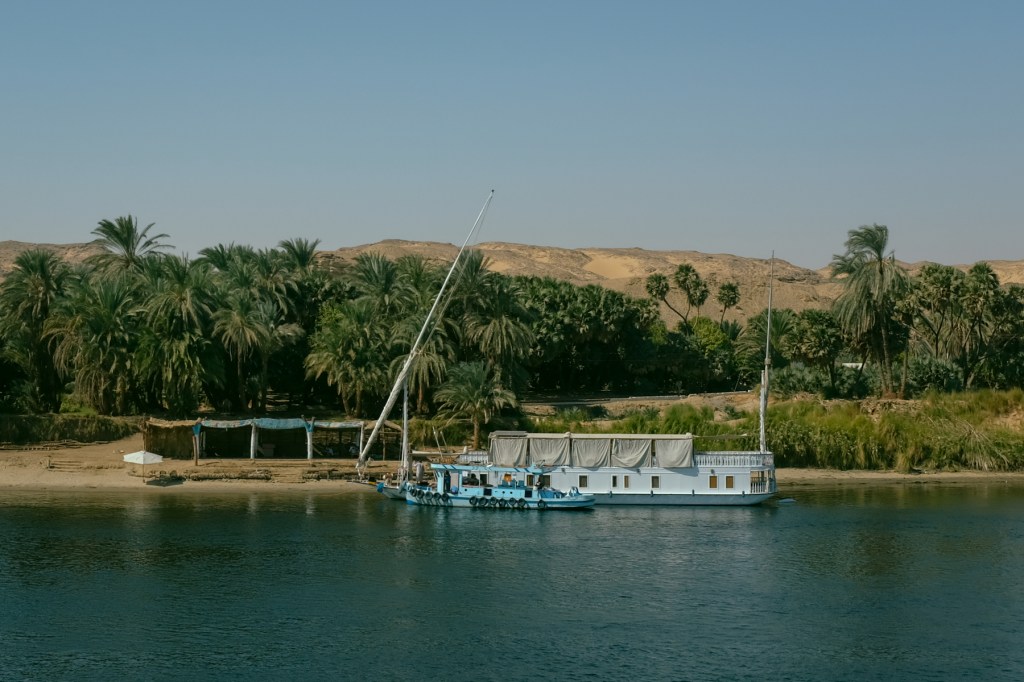
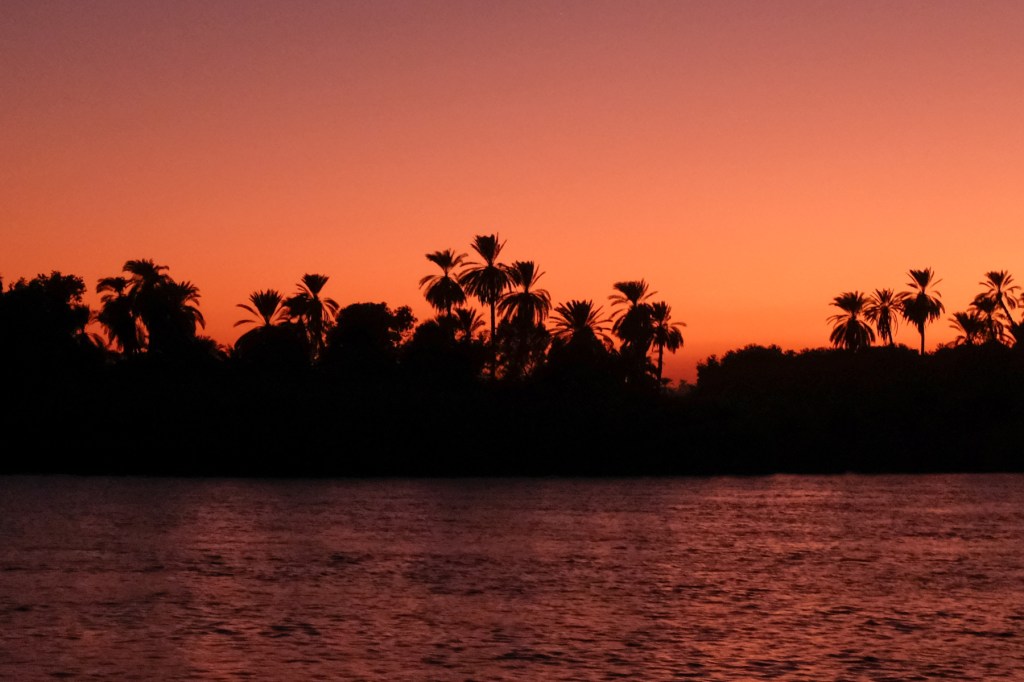
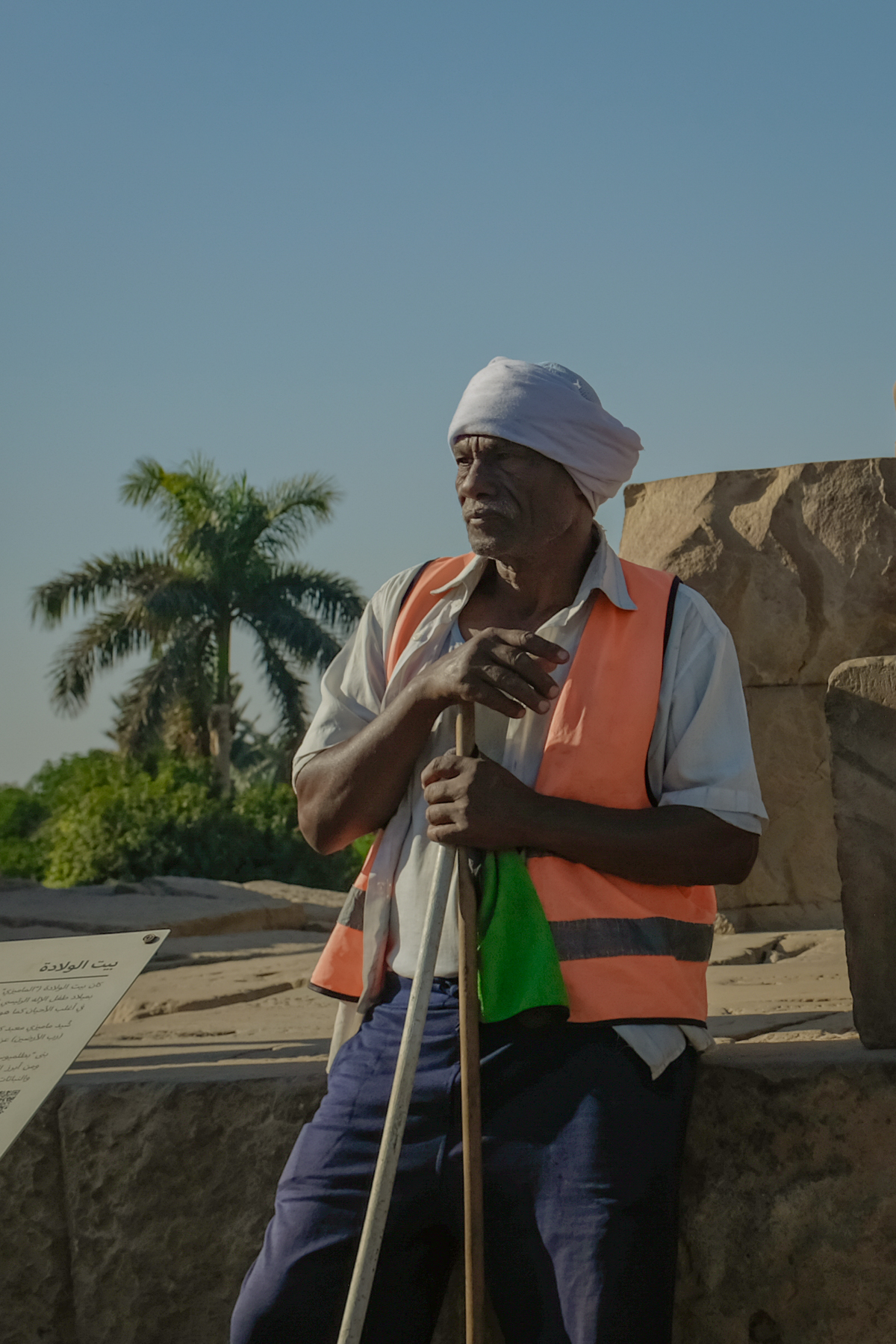
Departing Aswan, ships first stop at Kom Ombo—a place I will remember as having the most persistent souvenir vendors. The temple walls here are known for their cartouches of Cleopatra as well as for depictions of human sacrifices. Between Kom Ombo and Edfu unfolds some of Egypt’s most stunning scenery: groves of branching doum palms, double-masted dahabiyas drifting lazily downstream, fiery sunsets that set the river ablaze, and men in flowing jellabiya—Egypt’s traditional loose-fitting garment—moving unhurriedly alongside it all.
Luxor · الأقصر
Often called the world’s largest open-air museum, Luxor’s abundance of archaeological sites, temples, and royal tombs can overwhelm a first-time visitor. One advantage of a Nile cruise, then, is its streamlined itinerary covering the city’s most important sites.
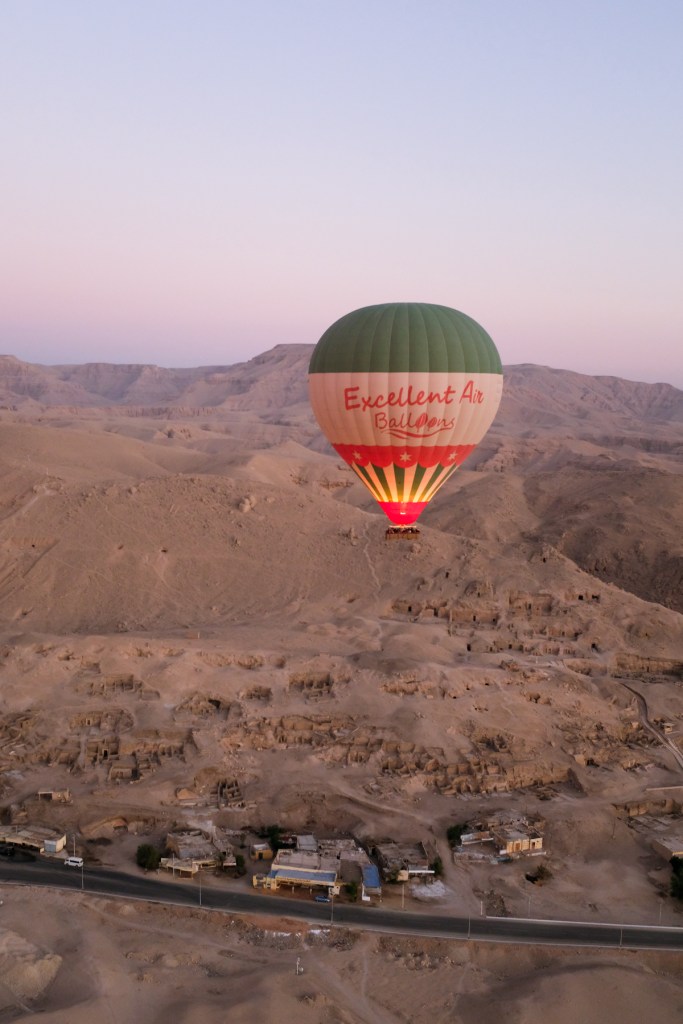
As leisurely as an all-inclusive Nile cruise sounds, some mornings start well before the crack of dawn. But rising above the Valley of the Kings in a hot air balloon as the sun breaks over the horizon more than makes up for the effort. On one side, young green fields stir to life. On the other is the illuminated Theban Necropolis—resting place of Egypt’s pharaohs. The Ancient Egyptians believed that the ultimate divinity, the sun, died each day in the west, and so the left bank of the Nile came to symbolize passage into the underworld.
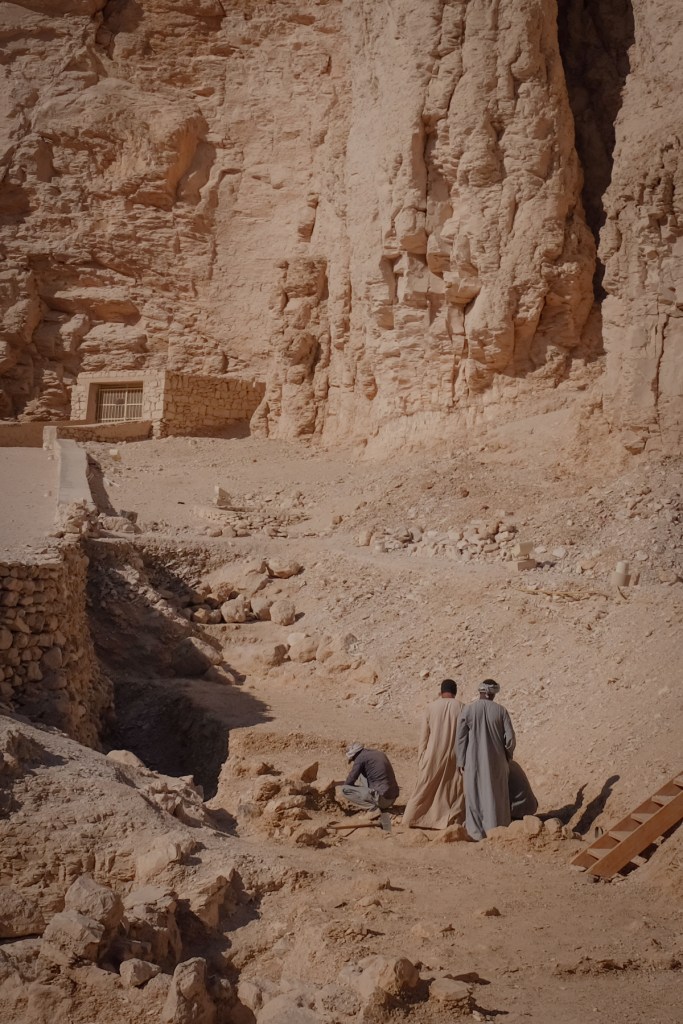
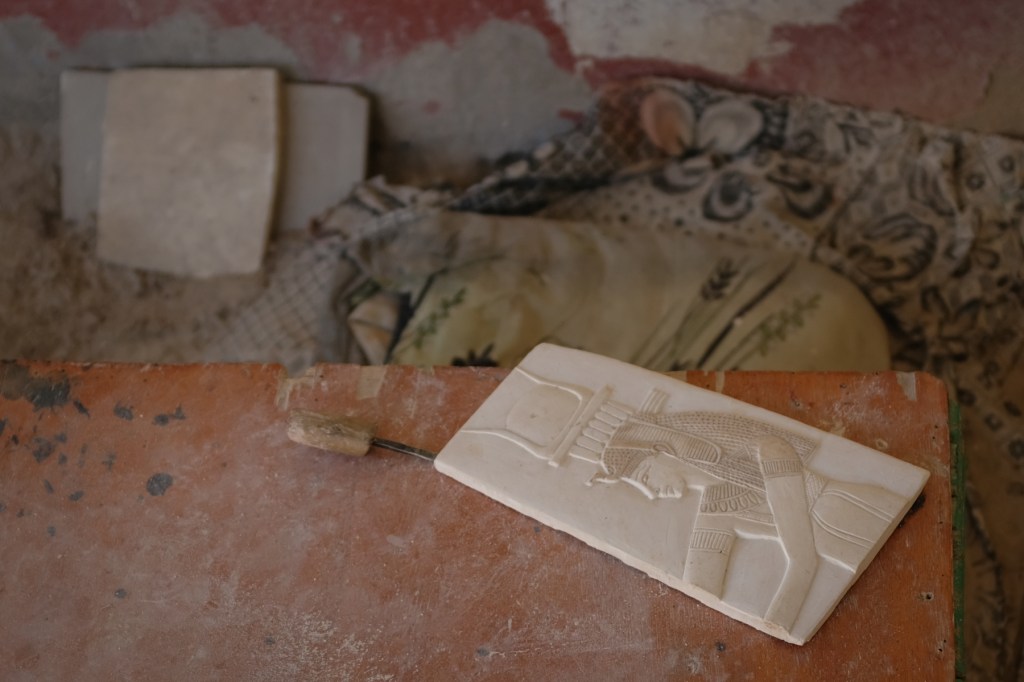
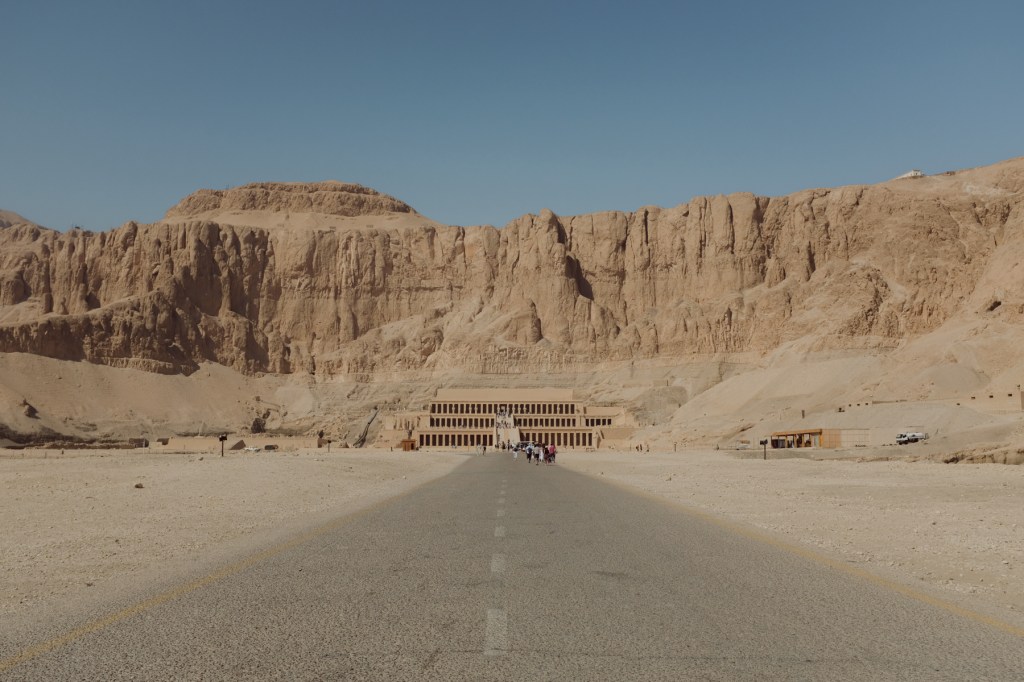
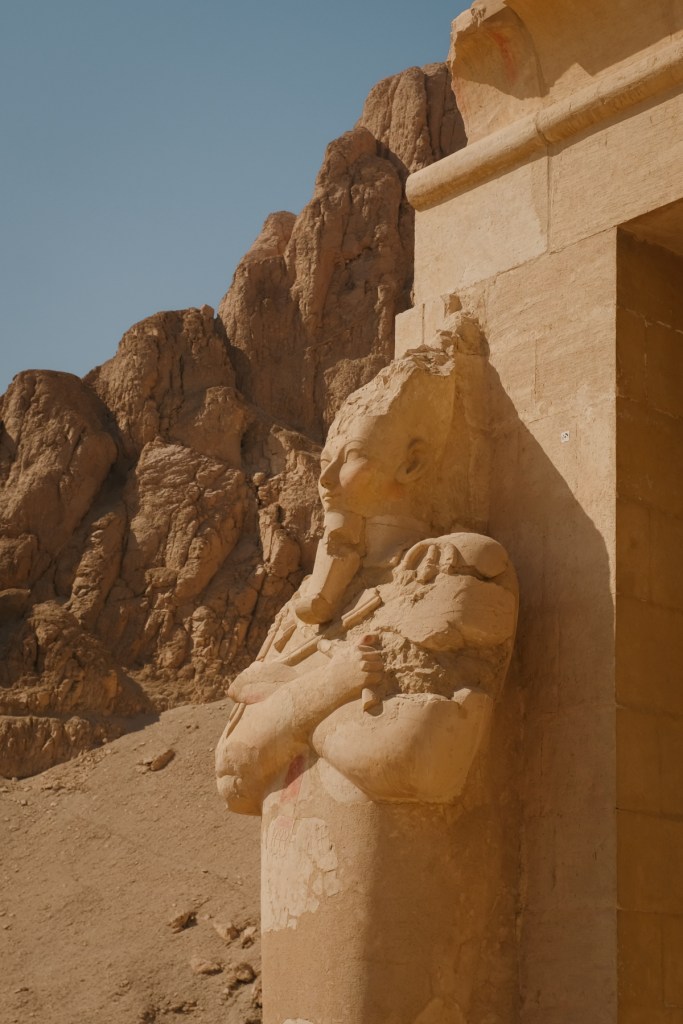
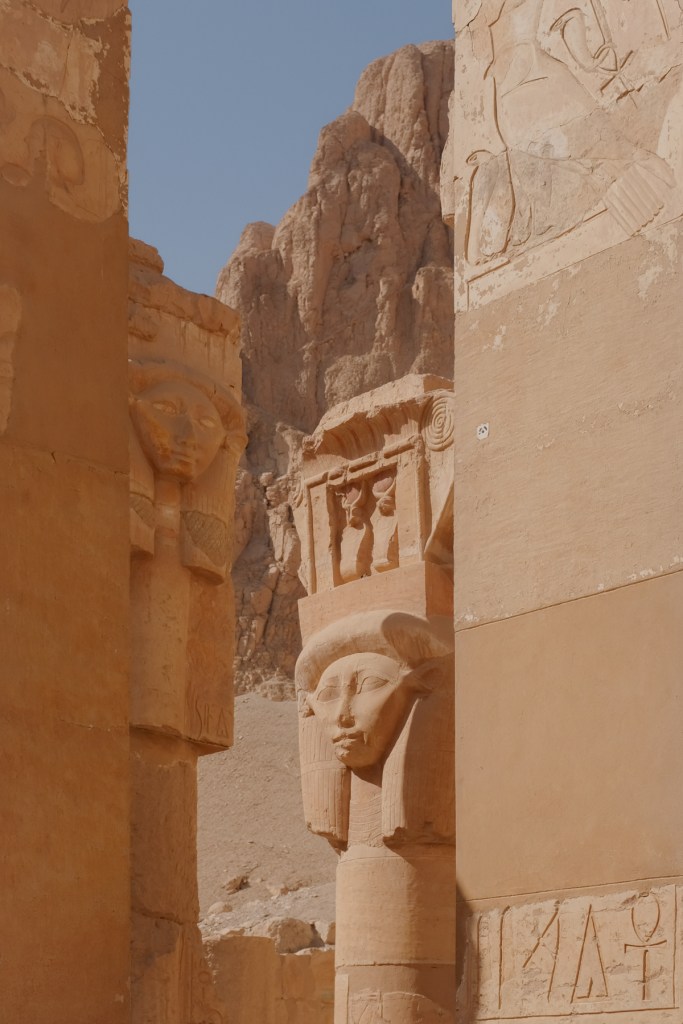
The Valley of the Kings presents an image of Ancient Egypt distinct from the one shaped by the Pyramids. While earlier pharaohs built grand tombs above ground, New Kingdom rulers favored to conceal their resting places. Modest tomb entrances hide long corridors that still preserve many hieroglyphs in their original vivid coloring. One architectural highlight in the Valley is the Temple of Hatshepsut, known for its symmetrical terraces set against jagged cliffs. The depiction of Hatshepsut—a female ruler shown in traditional male regalia—adds a further layer of intrigue.
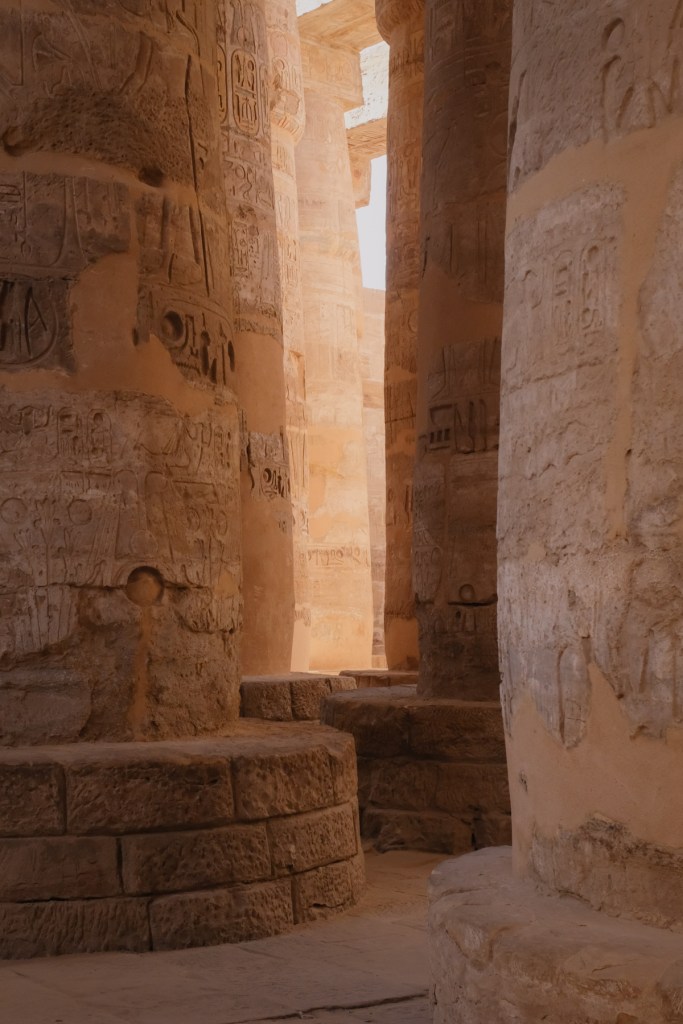
On the east bank of the Nile, the Temple of Karnak is a humbling and hallowed space which took shape over some 1,500 years. Its forest of towering papyrus columns are meant to evoke the primordial swamp which the Ancient Egyptians believed to have existed at the beginning of creation.
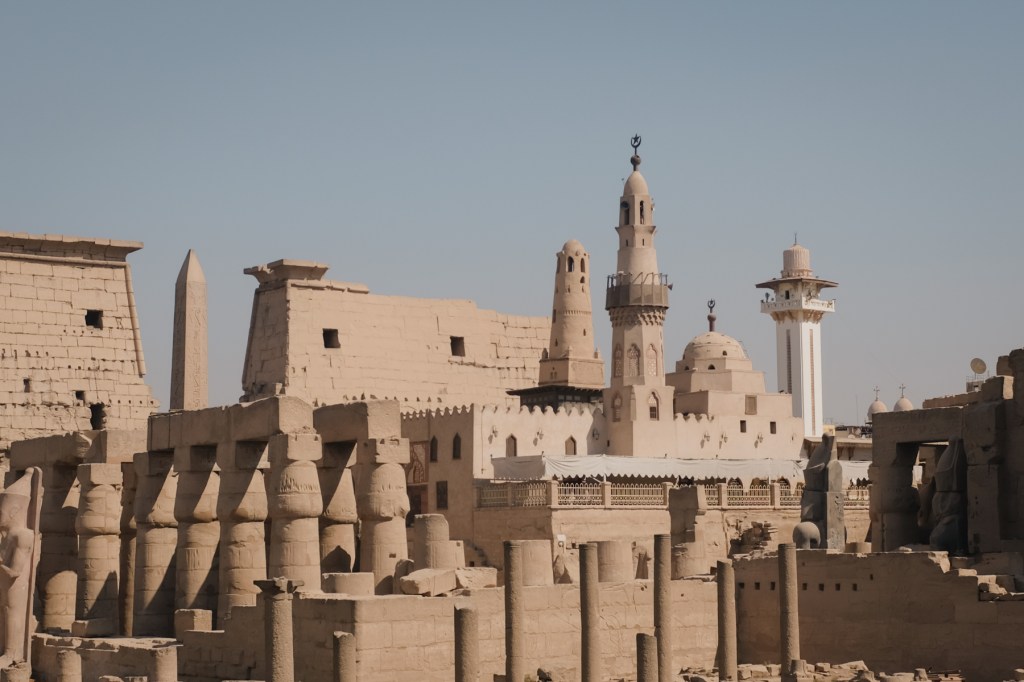
The journey along the Nile ends in downtown Luxor. Once, the city was known as Thebes. A wide avenue flanked by sphinxes connects Karnak to the Temple of Luxor, situated in the center of the modern city. Over the centuries, the temple has been adapted by each faith that successively ruled Egypt. Christians converted part of it into a church, and a mosque now stands today within its walls. It is a testament to the country’s intricate cultural tapestry—one which may divide in opinion, but is indisputably, uniquely unforgettable.
 Gregory Gioro
Leave a comment